
You get hurt when you work out, and diets fall apart in three days.
That isn't a lack of willpower.
Generic YouTube advice built for someone else's body tends to leave you hurt or worn out.
lifeGmap reads your body's signals and maps today's training, meals, and recovery into one path — an AI coach.
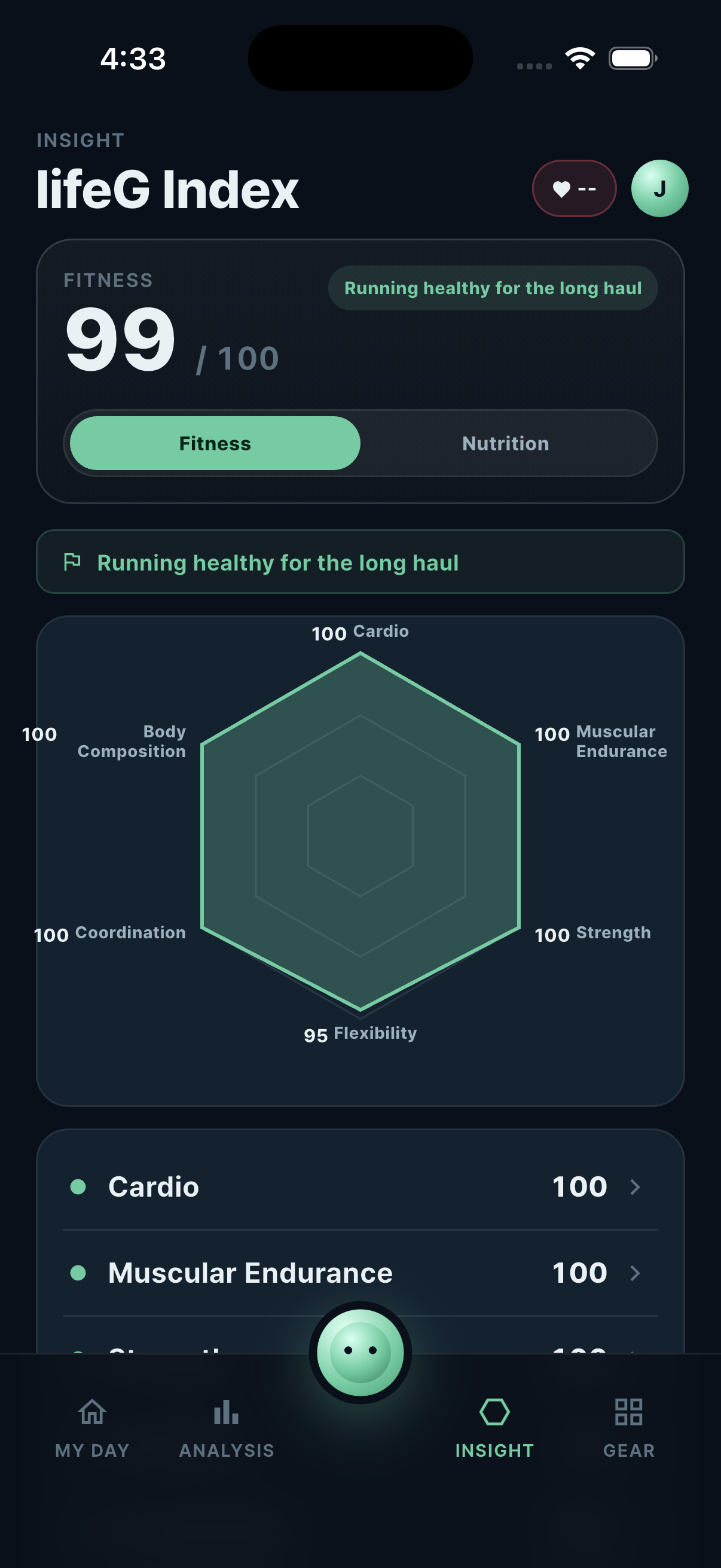
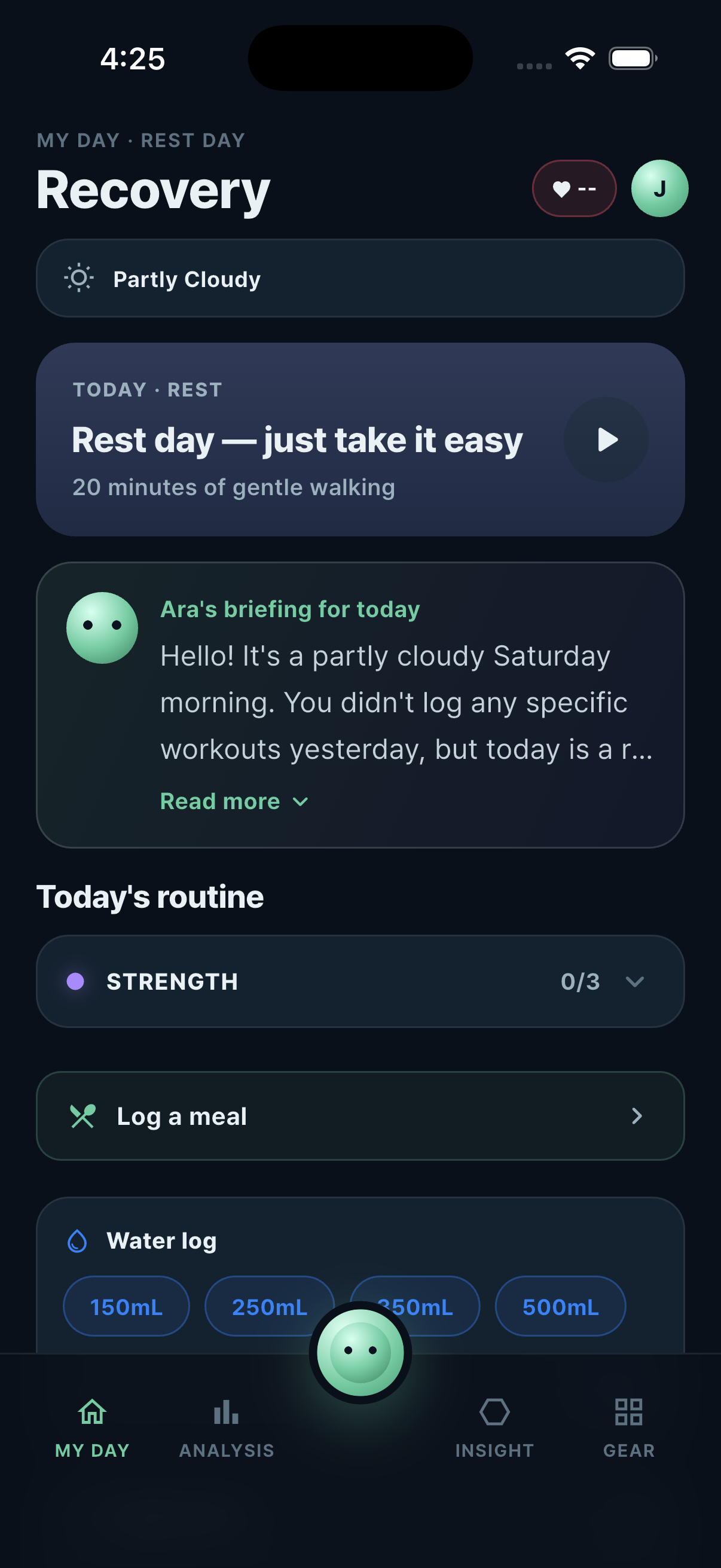

Today's plan is a 113-minute LSD run. Keep a steady pace without pushing too hard.
YouTube overflows with right answers.
The trouble is, those answers contradict each other.
Both have studies behind them. Both are right, and both are wrong — because the answer differs from person to person.
Copying 'the intensity everyone else does' breaks down your knees and feet before your body is ready. One injury, and it all stops.
A 'one-size-fits-all meal plan' doesn't fit your daily life, so it fizzles in three days. Deciding every meal alone is daunting.
It isn't that you failed.
You simply followed answers fit for 'someone else's body' — not your own.
Rather than 100 answers for others,
we tune to one signal from your body.
Studies diverge because the people in them differ. Take coffee — if your caffeine-metabolism genes are fast, it's medicine; if slow, it's poison. The reference point shouldn't be 'the average,' but 'you'.
lifeGmap reads how your body is doing and guides the training and meals that suit only you, every day.
The intensity you can handle today
How much yesterday's load has eased
Sleep, fatigue, and pain signals
Training and diet on separate tracks don't last.
We connect the three into one loop.
Today's training load → recovery → tomorrow's intensity and nutrition all connect, and adjust together each week.
Not 'go faster,' but checking each day whether you're holding an intensity you can recover from.
We suggest and track a balance point matched to your training volume and profile (age, chronic conditions).
Today,
just do this.
Consistency lasts when mornings are decision-free. Open the app and today's training, meals, and supplementary exercises appear in one feed, with Ara offering a briefing tuned to how you're doing today. Follow it from the top down, and you're done — even if you missed yesterday, you start again from where you are today.
Not how fast or how far,
but how well you recovered.
So you don't break down chasing numbers, we look at recovery first, every day. During outdoor and indoor sessions, we read your heart rate and guide pace and intensity in real time.
If you're under-recovered, today eases off.
Pain signals are reflected right away; weak areas start with 171 supplementary movements first.
A breathable base (MAF) plus an 80:20 split.
Heart-rate-based pace and intensity cues during your session.
A workout isn't something you review afterward.
We look at it together, alongside you, as it happens.
Voice, meditation, form, and sensors — Ara is with you in the very moment you train.
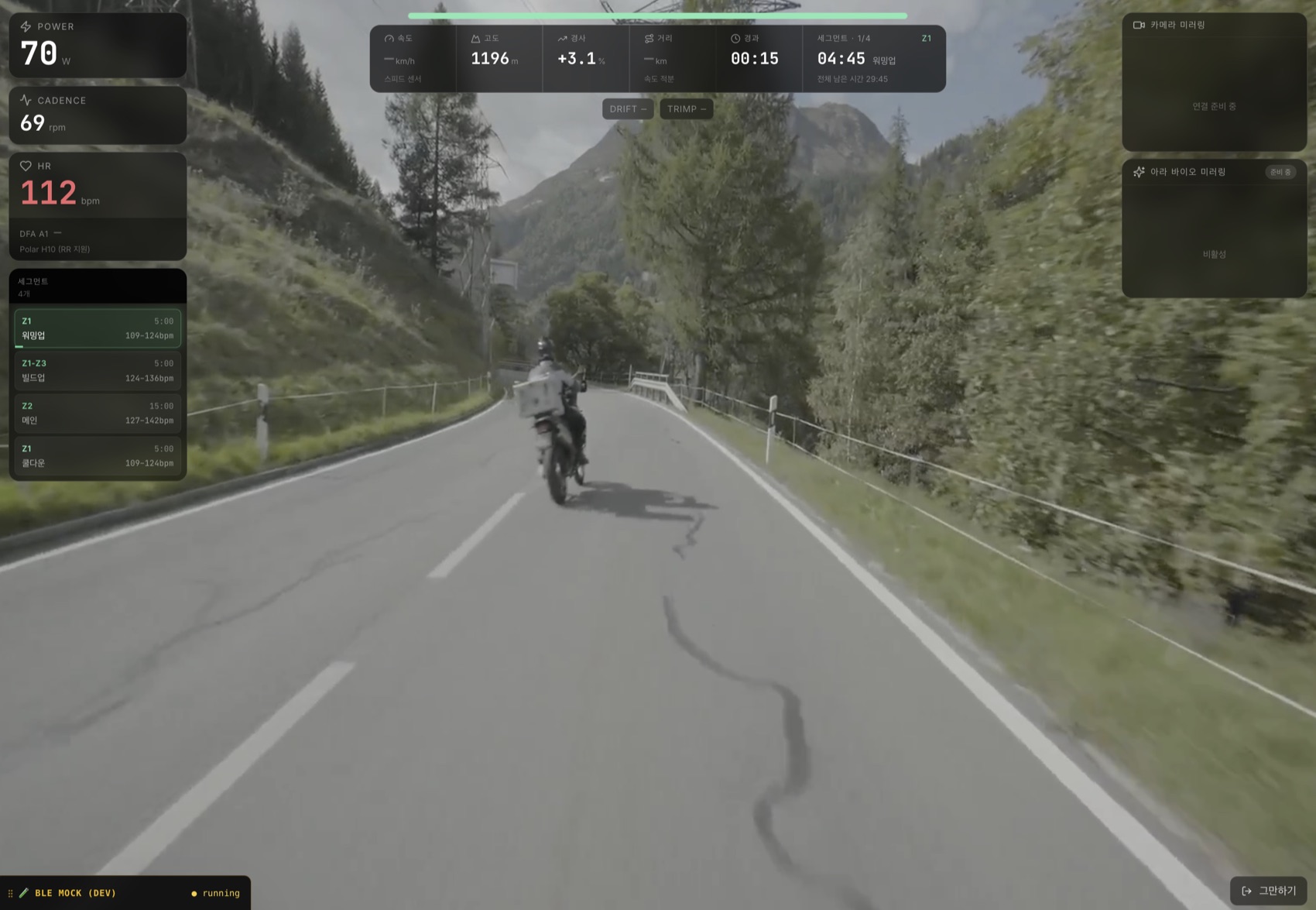
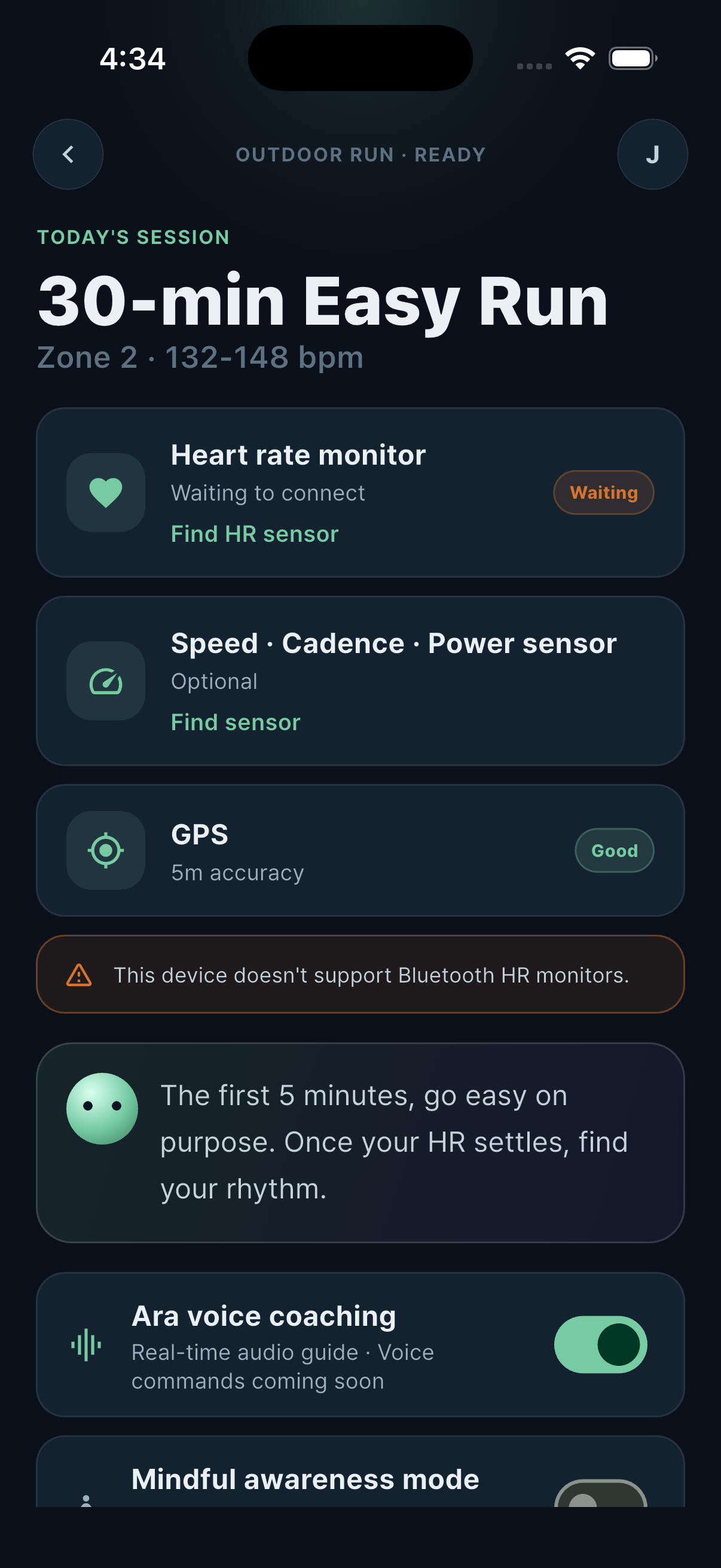
Heart-rate-based pace and intensity, spoken during your session.
A mindfulness guide that turns on only in comfortably easy ranges.
The camera watches your form and counts reps and time with you.
HRM, power, and cadence over Web Bluetooth — not locked to any one device.
Perfect meal plans don't get followed.
So we don't make them.
Just say what you ate, let it remember your frequent combos, and confirm complex Korean dishes with one tap.
We don't recommend plans you can't keep, like single-food or very-low-carb regimens.
Not 'cut this out,' but what's lacking and what's in excess.
Recovery nutrition matched to today's load, suggested and tracked.
All nutrition guidance stays within medical boundaries — no diagnosis or prescription.
Protein's a little low. Want to add a meal this evening?
Start with a line, finish with a tap.
Tap once on the suggested composition to confirm
Complex Korean dishes often fool photo recognition. Confirming the composition in one tap improves accuracy.
Don't interpret it alone.
Look at it together with Ara.
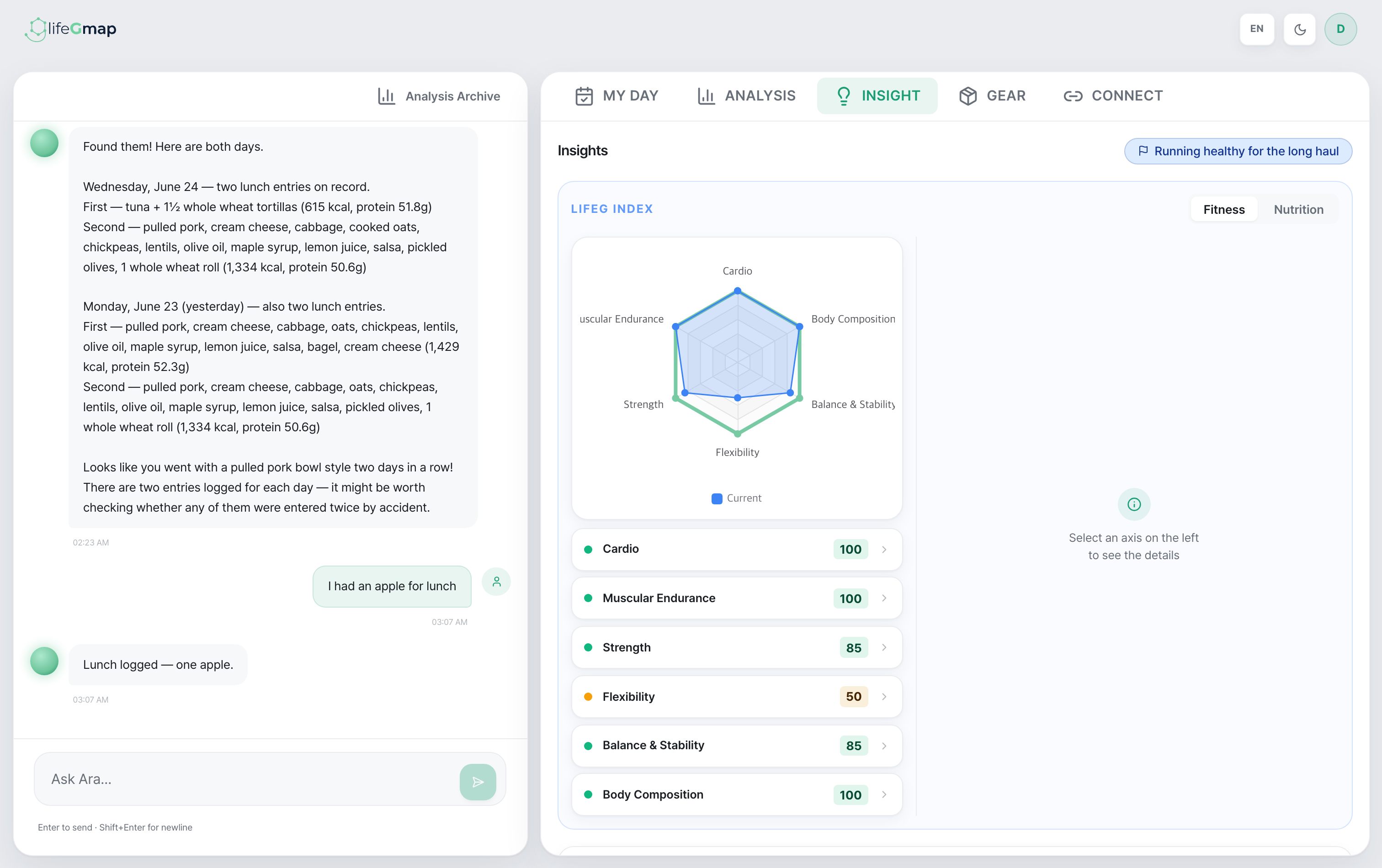
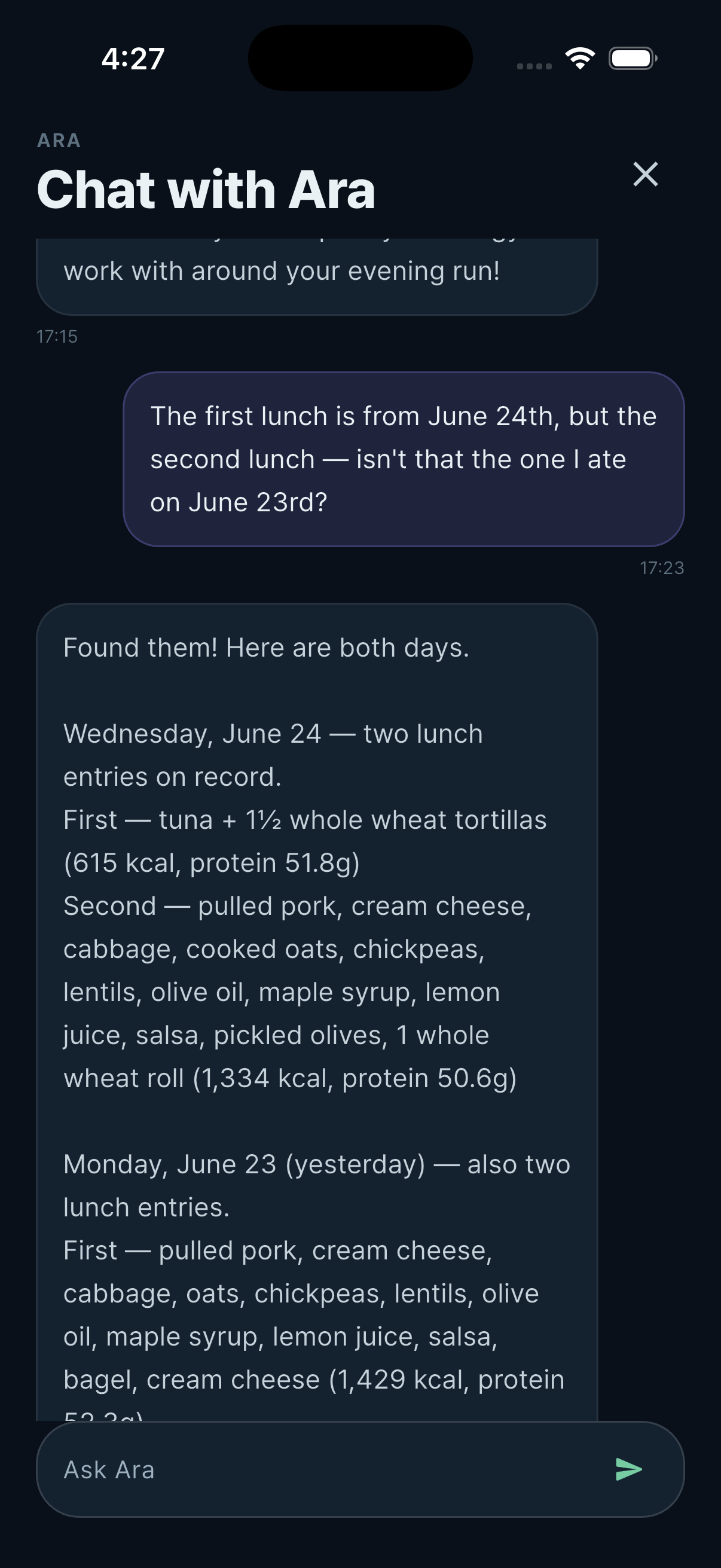
One side of the screen is your conversation with Ara, the other is your data. Look together, ask, and adjust on the spot. Ara leans on your records and scientific evidence rather than making things up, and adjustments from the conversation carry straight into your next plan.
If we sum up today's session…
It's not just about losing weight,
but losing it while keeping muscle.
People on GLP-1 (such as Wegovy or Mounjaro) and those over 40 can lose muscle along with weight. lifeGmap focuses on preventing muscle loss and managing recovery.
Above all — building 'sustainable health habits' while on the medication helps form the habits you'll need to manage rebound risk after you stop. Habit formation is exactly what we do best.
An AI that handles health must not make things up.
So we limited arbitrary generation by design.
Your weekly plan is calculated by verified scientific formulas, not by AI — same input, same output.
Answers lean on knowledge with verified academic sources. What it doesn't know, it doesn't infer.
The system blocks wording that could be mistaken for medical practice, and exercises contraindicated by injury.
lifeGmap is not a medical device or service, and does not diagnose, prescribe, or treat.
lifeGmap is a navigator that guides you toward the
destination of healthy longevity.

Anyone can take a wrong turn now and then. Each time, lifeGmap will guide you back to the right route. As a lifelong companion, we'll be your pacemaker.

A coach tuned to your body,
meet it now.
The path to a healthy long life — it starts from your own starting point.